HomeCostGuide

Deck cost guide

How much does it cost to build a deck?

Use this guide to compare deck size, material choices, railings, stairs, and site conditions before you request contractor quotes or price materials.

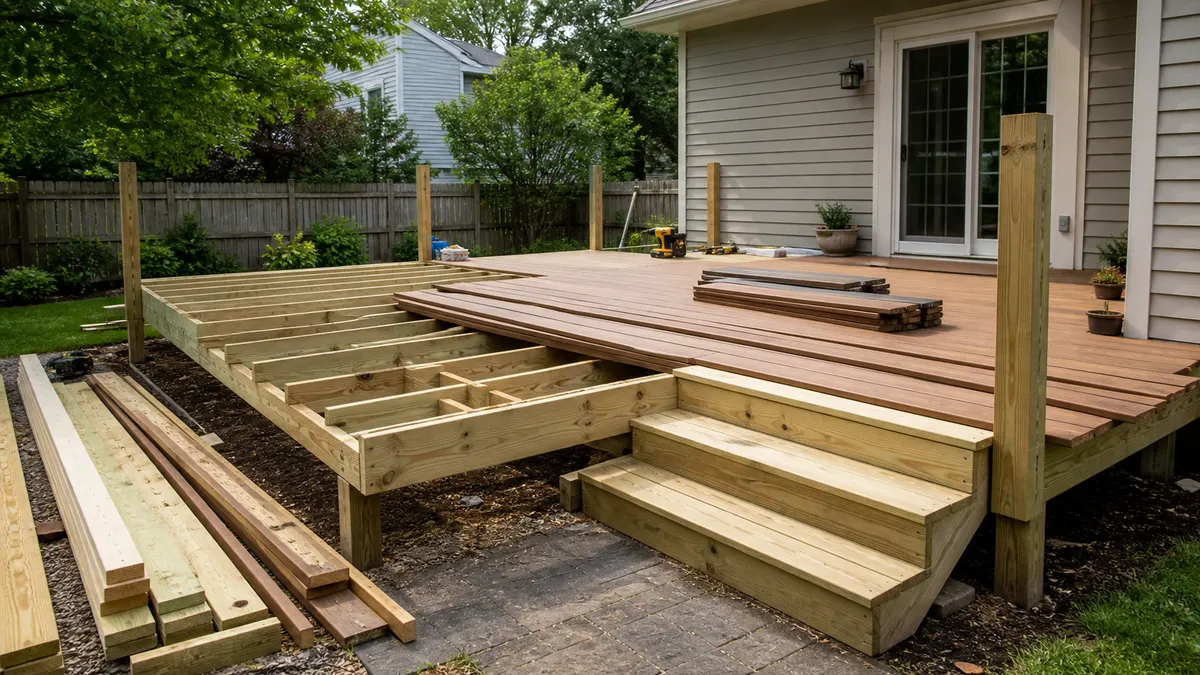
Backyard deck construction with framing, deck boards, and railing materials

Quick planning action

Estimate deck costs with the free calculator

Open deck calculator

The calculator uses deck size, decking material, railing needs, and complexity to create a planning range for early budgeting.

Deck cost drivers

Deck size

Square footage drives framing, decking, fastener, railing, footing, and labor costs. Larger decks cost more overall but may have a lower cost per square foot.

Decking material

Pressure-treated wood, cedar, composite, and PVC decking have different material costs, maintenance needs, and installation details.

Railings and stairs

Elevated decks, stair runs, landings, and upgraded rail systems can add meaningful cost beyond the basic platform.

Site conditions

Slope, access, soil, demolition, permits, ledger attachment, and footing requirements affect the final price.

Planning steps

How to plan a deck project

  1. 1

    Measure the desired deck footprint and decide whether it will be ground-level, elevated, attached, or freestanding.

  2. 2

    Choose decking, railing, stair, fastener, flashing, and finish materials before comparing contractor prices.

  3. 3

    Confirm footing depth, ledger attachment, permits, inspections, and code requirements for railings and stairs.

  4. 4

    Ask each quote to separate framing, decking, railings, stairs, demolition, permits, cleanup, and warranty details.

How to plan a deck build before asking for bids

Deck cost depends on structure, access, height, material, railing, and stairs. A clear sketch and material plan make quotes easier to compare.

Define the deck footprint

Start with how the deck will be used, then translate that into size and layout.

  • Measure the proposed length, width, height above grade, door locations, stair direction, and landing needs.
  • Note slopes, drainage, utilities, trees, tight access, old deck removal, and soil or footing concerns.
  • Decide whether the deck is ground-level, raised, attached, freestanding, covered, or built around features.

Choose structure and finish assumptions

Decking boards are visible, but framing, footings, fasteners, and railings are major parts of the cost.

  • Compare pressure-treated lumber, cedar, composite, and PVC decking with maintenance expectations.
  • Ask about joist spacing, beam sizing, ledger attachment, flashing, footings, hardware, and inspections.
  • Specify railing type, stair count, lighting, skirting, benches, privacy screens, and post caps.

Review long-term ownership costs

The cheapest build may not be the cheapest deck to own.

  • Ask how often the material needs cleaning, staining, sealing, or board replacement.
  • Review manufacturer warranty terms for decking, railing, fasteners, and hidden fastening systems.
  • Confirm whether the quote includes cleanup, haul-away, permit drawings, and final inspection support.

Cost factors to confirm before you hire

  • Height, footing depth, stair count, railing style, ledger attachment, and decking material determine much of the installed cost.
  • Composite and PVC decking usually cost more upfront than pressure-treated lumber but reduce staining and sealing work later.
  • Poor access, sloped yards, demolition, permit drawings, and inspections can add meaningful labor.

Common planning mistakes

  • Comparing bids without matching railing, footing, joist spacing, hardware, flashing, and stair assumptions.
  • Ignoring water management where the deck attaches to the house.
  • Choosing a deck size before confirming furniture clearances, grill placement, and traffic paths.

Questions to ask contractors

  • What footing type, framing sizes, ledger flashing, and fastener system are included?
  • Are permits, drawings, inspections, old deck removal, and haul-away included?
  • What workmanship warranty applies, and what maintenance does the decking manufacturer require?

Timing and scheduling note

A straightforward deck can be built in days after permit approval, while elevated, multi-level, or composite projects can take longer because of inspections, material staging, and railing details.

Related planning pages

Three deck budgeting rules

  • Price the structure and surface separately. Framing, footings, decking boards, railings, stairs, and finish work should be easy to compare across bids.
  • Choose materials with maintenance in mind. Wood can cost less upfront, while composite and PVC may cost more but reduce staining and sealing work.
  • Confirm code requirements. Rail height, stair geometry, footings, ledger attachment, and permits can affect the design and price.

What to ask deck contractors

What decking, railing, fastener, footing, and framing materials are included?

Are permits, drawings, inspections, demolition, and haul-away included?

How will ledger attachment, flashing, drainage, and joist protection be handled?

What warranty applies to labor and selected decking materials?

Deck cost FAQs

Is composite decking worth the extra cost?

Composite costs more upfront than pressure-treated wood but may reduce staining, sealing, and maintenance over time.

Do stairs add a lot to deck cost?

Stairs can add cost because they require framing, railings, treads, landings, and careful code-compliant layout.

Should deck joists use flashing or joist tape?

Many builders use flashing or joist tape to help protect framing from moisture. Ask contractors how they handle water protection.

Why this guide matters

Deck estimates can look similar while hiding big differences in materials, flashing, railings, and stairs. A structured budget makes bids easier to compare.